
Some drinks are ordered for their taste. The Tequila Sunrise gets ordered for its colour. Watch someone pour one and...
Blog Search
Latest posts
-
 A Tequila Sunrise without the TequilaRead more ...
 -
 The Quiet Shock in the Alcohol IndustryRead more ...
For more than a century, alcohol has been one of the safest bets in business. Companies such as Diageo (founded...
-
 The Social Alchemy of Alcohol: From Ancient Bonding to Risk SpiralsRead more ...
Alcohol has been an integral part of human culture for millennia, acting as both a foundation for civilization and a...
-
 Chocolate and Sparkling Wines: Consider this before pairing!Read more ...
It’s the time of year when chocolate and sparkling wines become symbols of gifts, pleasure, and undeniably good...
-
 Dry November 2025 – How is it in Hungary?Read more ...
I decided to look into all the articles recently published in Hungary about Száraz November (Dry November).So here is...
Popular posts
-

-
Dry November 2025 – How is it in Hungary?I decided to look into all the articles recently published in Hungary about Száraz November (Dry November).So here is...Read more ...
-
Chocolate and Sparkling Wines: Consider this before pairing!It’s the time of year when chocolate and sparkling wines become symbols of gifts, pleasure, and undeniably good...Read more ...
-
 Why Epicurea?Because the alcohol-free revolution couldn’t start in Hungary. It had to be imported.Read more ...
 -
The Social Alchemy of Alcohol: From Ancient Bonding to Risk SpiralsAlcohol has been an integral part of human culture for millennia, acting as both a foundation for civilization and a...Read more ...
Blog tags
The Quiet Shock in the Alcohol Industry
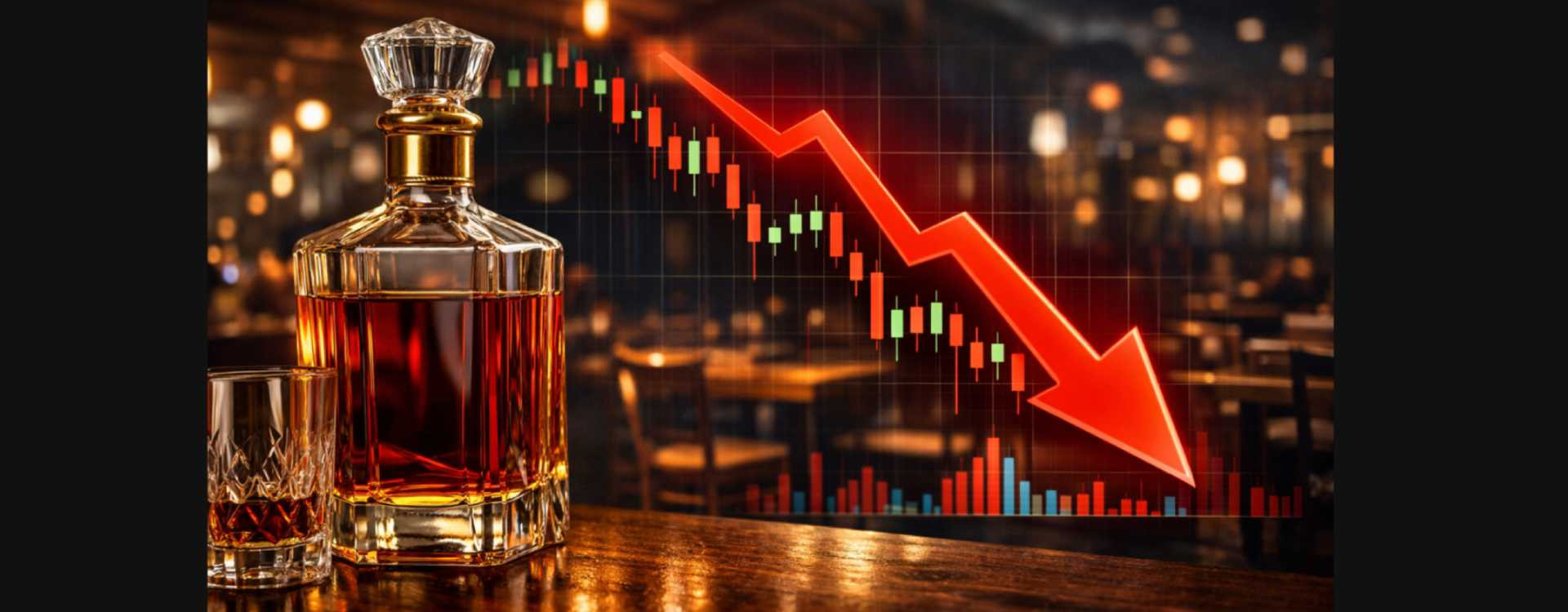
Since their peak around 2021, the market value of the world’s largest spirits companies has fallen dramatically. In some cases, close to half of their stock value has disappeared.
Companies such as Diageo, Pernod Ricard, and Brown-Forman — historically considered some of the safest long-term investments in consumer goods — have seen stock market value declines of roughly 40–55% from their post-pandemic peaks.
(Sources: Financial Times coverage of spirits sector slowdown; company investor reports; Reuters market analysis on Diageo and Pernod Ricard performance)
The explanation is quite interesting. It appears to be the result of a perfect storm of several factors.
For years, the industry had already observed a declining trend in alcohol consumption volumes. However, producers compensated through premiumisation — selling fewer bottles, but at much higher prices. Consumers were increasingly paying for quality, brand and experience rather than quantity.
This strategy proved extremely profitable for more than a decade and helped maintain revenue growth despite consistently lower consumption volumes.
(Source: IWSR Global Drinks Market Analysis – Premiumisation trend reports)
But recently the situation appears to have taken a harder turn.
Demand in key markets such as the United States and China has slowed, the two most important drivers of global spirits growth in recent years. At the same time, distributors that overstocked after the post-pandemic consumption rebound are now sitting on unusually high inventories, forcing producers to slow shipments.
(Source: Reuters reporting on Diageo inventory correction and spirits demand slowdown)
Additional social factors are also changing consumption patterns:
- Younger generations are drinking significantly less alcohol than previous cohorts. According to long-term polling data, the share of young adults in the United States who report drinking alcohol has declined noticeably over the past two decades.
(Source: Gallup – Young Adults Drinking Less Alcohol, 2023)
- Health awareness is rising, and wellness culture increasingly promotes moderation. Some analysts also point to emerging lifestyle factors such as GLP-1 weight-loss medications, which may reduce appetite and alcohol cravings.
- Finally, the legal cannabis markets, which compete for similar leisure spending in some regions.
(Source: Financial Times analysis on alcohol industry headwinds; Bloomberg coverage of GLP-1 impact on consumer sectors)
The result is a 40–55% decline in stock market value for companies that were once considered nearly untouchable consumer staples.
And the hospitality industry should pay attention.
When the most stable companies in the alcohol world begin to wobble, it may signal something deeper than a temporary market correction. The way people drink, socialize, and spend money in restaurants and bars may be changing — and not necessarily returning to previous patterns.
So the question becomes:
Are we preparing for the shift?
Some of those changes are already visible much closer to home.
According to market analysis from Circana, value sales of alcoholic beverages in retail declined across the six largest European consumer markets — France, Germany, Italy, the Netherlands, Spain and the United Kingdom — after the post-pandemic surge.
(Source: Circana European FMCG Alcohol Market Review)
In Central Europe, some of the most alcohol-identified countries are also seeing structural changes.
In the Czech Republic — historically one of the world’s strongest beer cultures — reporting from major outlets describes a steady decline in the number of pubs over the past decade.
(Source: Radio Prague International reporting on pub closures)
Germany and Poland show similar pressure points. Rising operating costs, demographic changes, and shifting lifestyle habits are making it harder for alcohol-centered venues to rely on the same consumption patterns that sustained them for decades.
(Source: Euromonitor hospitality sector analysis; European bar and restaurant industry reports)
Hungary shows an even more interesting long-term signal.
According to data from the Hungarian Central Statistical Office (Központi Statisztikai Hivatal – KSH), the share of alcoholic beverages within total catering sales has been gradually declining for years.
- In 2003, alcohol represented 13.47% of hospitality sales value.
- By 2011, the share had already dropped to 10.68%.
- By 2019, it stood at 10.29%.
- In 2021, during the pandemic, it fell to 5.90% due to nightlife closures.
(Source: Hungarian Central Statistical Office – Vendéglátás értékesítésének megoszlása termékcsoport szerint)
Even ignoring the pandemic distortion, the long-term trajectory is clear:
Alcohol represents a smaller part of hospitality revenue than it used to.
And this trend will likely continue.
This does not necessarily mean that Hungarians are abandoning alcohol. But it does suggest that hospitality businesses will become ever less reliant on alcohol, and soon enough, it might stop being a central economic driver of revenue.
Reinvention therefore is key. People will always have a need for social gathering and celebration, but the economic framing of those experiences may change, and most venues might not be seeing this, nor adapting consistently enough.
The same competitive pressures visible in the United States and Western Europe as usual, gradually arrive to Central Europe as well. The growing wellness culture, lifestyle changes, alternative recreational markets, and changing consumer preferences are also happening in Hungary, and they all contribute to a broader shift toward moderation.
For restaurant owners, bar managers and hotel operators, recognizing these changes early may become one of the most important strategic decisions in the years ahead.
Posted in:
Alcohol-free Hungary

Leave a comment
Log in to post comments