
For more than a century, alcohol has been one of the safest bets in business. Companies such as Diageo (founded...
Blog Search
Latest posts
-
 The Quiet Shock in the Alcohol IndustryRead more ...
 -
 The Social Alchemy of Alcohol: From Ancient Bonding to Risk SpiralsRead more ...
Alcohol has been an integral part of human culture for millennia, acting as both a foundation for civilization and a...
-
 Chocolate and Sparkling Wines: Consider this before pairing!Read more ...
It’s the time of year when chocolate and sparkling wines become symbols of gifts, pleasure, and undeniably good...
-
 Dry November 2025 – How is it in Hungary?Read more ...
I decided to look into all the articles recently published in Hungary about Száraz November (Dry November).So here is...
-
 Why Epicurea?Read more ...
Because the alcohol-free revolution couldn’t start in Hungary. It had to be imported.
Popular posts
-

-
Dry November 2025 – How is it in Hungary?I decided to look into all the articles recently published in Hungary about Száraz November (Dry November).So here is...Read more ...
-
Chocolate and Sparkling Wines: Consider this before pairing!It’s the time of year when chocolate and sparkling wines become symbols of gifts, pleasure, and undeniably good...Read more ...
-
Why Epicurea?Because the alcohol-free revolution couldn’t start in Hungary. It had to be imported.Read more ...
-
The Social Alchemy of Alcohol: From Ancient Bonding to Risk SpiralsAlcohol has been an integral part of human culture for millennia, acting as both a foundation for civilization and a...Read more ...
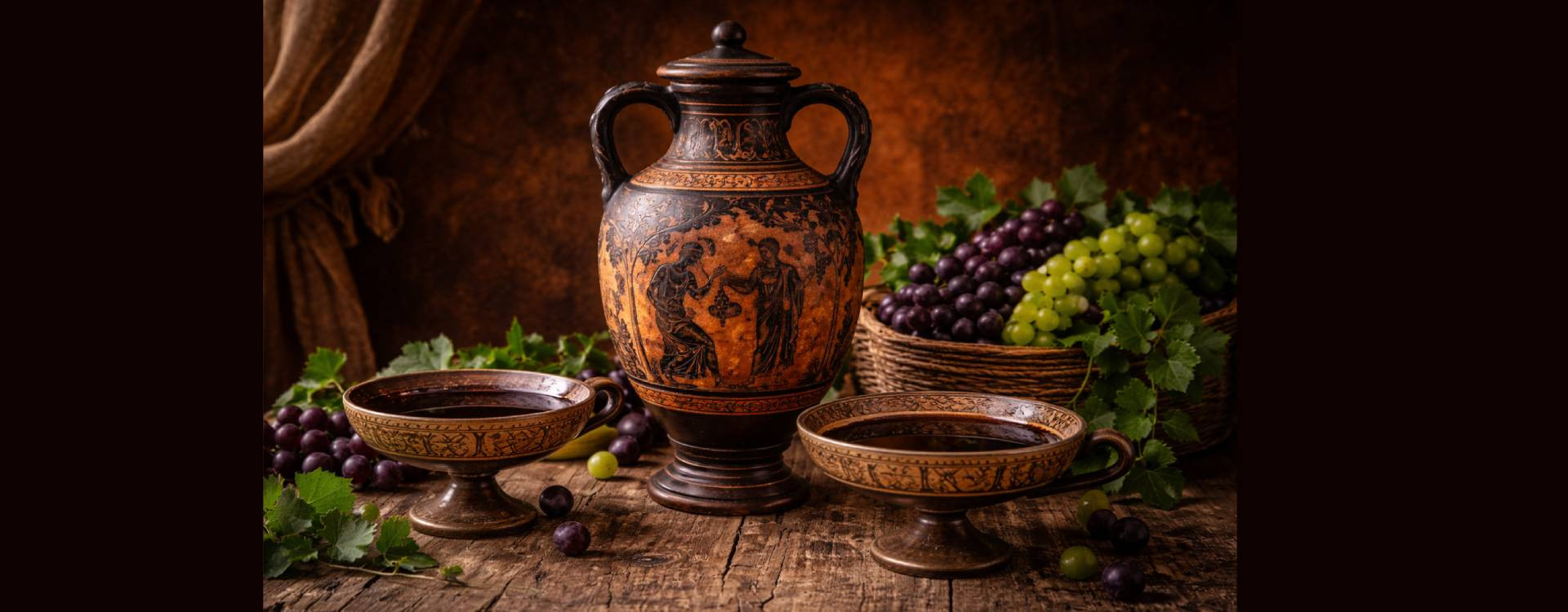
The Social Alchemy of Alcohol: From Ancient Bonding to Risk Spirals
The Social Lubricant Effect
Humans are a successful species primarily because of our ability to work in groups, yet we are fundamentally not very good at initial socialisation. According to Professor David Nutt in his ZOE podcast interview, meeting strangers often triggers a natural baseline of anxiety. Alcohol acts as a "social lubricant" because it boosts GABA, the brain's primary relaxing and calming neurotransmitter. This allows individuals to engage without anxiety, look others in the eye, and share more openly, which builds rapport and conviviality.
Historical Roots: The Engine of Civilization
The relationship between humans and alcohol may be far older than previously thought. According to archaeologist K. Kris Hirst’s historical timeline, humans or their ancestors may have theoretically recognised naturally fermented fruit juices as far back as 100,000 years ago. Direct evidence of alcohol production—specifically mead made from honey—dates back roughly 40,000 years.
There is even a provocative theory that alcohol, not food, birthed civilization. According to Professor David Nutt's discussion on the ZOE podcast, some researchers argue that the original purpose of domesticating wheat was to produce beer rather than bread. According to Hirst’s timeline, by the 8th millennium BCE, crops like rice and barley were already being domesticated for fermentation. Furthermore, ancient monuments like Stonehenge may have served as massive gathering places where disparate tribes met to have parties, facilitating genetic variation through "meeting and mating".
Inducing Trust, Teams, and Group Dynamics
In a professional context, the ability to bond quickly is essential for complex projects. According to Professor Nutt, because alcohol facilitates social communication, it allows humans to become the "social animals we aspire to be," which is how we "build teams, sell boats, and build armies". This bonding is driven by the brain's endorphin system—the same system triggered by dancing or singing—which according to Professor Robin Dunbar and the University of Oxford, acts as a primary buffer against illness and promotes community trust.
Scientific studies show that this connection is not just a feeling but a measurable shift in dynamics. According to a study led by Harriet de Wit in Scientific Reports, a moderate dose of alcohol significantly increases feelings of connection and closeness between strangers, reaching a magnitude similar to the bond formed by having a "deep" personal conversation. According to Oxford research, these interactions are most effective in smaller settings that encourage "whole-group conversation," which directly correlates with higher life satisfaction and increased trust in one’s community or team.
The Social Risk and the Downward Spiral
While the benefits of connection are real, they come with a high cost. A surprising insight, according to a study by Professor David Nutt published in The Lancet, is that alcohol is more harmful than MDMA (ecstasy). In fact, it is ranked as the most harmful drug to society overall when aggregating harms to the user and to others, such as lost productivity and social disorder.
The most insidious risk is a "bi-directional" feedback loop. According to Harriet de Wit’s research, there are reciprocal interactions between the substance and the setting: alcohol enhances the enjoyment of social interactions, and conversely, the presence of others enhances the rewarding effects of the drug. According to the ZOE podcast, this can lead to a dangerous spiral where people build tolerance and require more alcohol to achieve the same social "high".
A Rational Approach to Connection
To navigate this, according to Professor Nutt, individuals should adopt a "rational use" of alcohol. His primary recommendation for anyone looking to cut down is to never drink a drink that, in hindsight, did not give you a genuine benefit. He estimates that for most people, roughly half of the alcohol consumed provides no real value. If you find that a drink does not contribute to your social wellbeing or personal recovery, he suggests it is better to avoid it entirely and focus on maximizing brain power and true social connection without the inflammation of a hangover.
And if holding something in your hand truly matters — as we’ve seen it does — bring your own alcohol-free wine. The ritual stays, the risks don’t. It’s the best of both worlds!
Posted in:
Alcohol and health

Leave a comment
Log in to post comments